Friday, February 09, 2007

Pieman Probes Parks; Pork or Prudence?

The Uncle was asked to look into the 150% Park Pass fee increase. I turned the job over to the Pieman and this is what he sent so far:


Dear Uncle,

As far as I can tell. the Parks Commission says that they need the increased fee to pay the costs of creating and keeping track of the actual park passes themselves. They are installing a new (and expensive) system.

It seems like a huge jump and their apparent decision to void all existing passes is disturbing. I'm trying to double check this last point. If someone paid for a four year pass in 2006, are they just out of luck?

I'll let you know what else I find out.

Jonathan

Thursday, February 08, 2007

Your State Government At Work

ALBANY, Feb. 7 — State lawmakers rebuffed Gov. Spitzer on Wednesday by choosing one of their own as the next state comptroller, reneging on a deal they made with the governor to choose from candidates deemed qualified by an outside panel.

Their selection of Assemblyman Thomas P. DiNapoli of Nassau County to a post that monitors the state’s finances and oversees its $145.7 billion pension fund was a stinging rebuke to the new governor, who portrayed the vote as a crucial test of his efforts to reform Albany. Mr. Spitzer had wanted a candidate from outside the Legislature who had financial expertise to replace Alan G. Hevesi, who resigned in a scandal.

But the Legislature, which grew used to bucking the governor during the Pataki administration, showed it was more than willing to do so again despite Mr. Spitzer’s landslide victory in November.

Assembly Speaker Sheldon Silver, a Democrat like the governor, decided to ignore the agreed-upon selection process after the screening panel failed to recommend any lawmakers for the post. He and Joseph L. Bruno, the Republican majority leader of the State Senate, threw their support behind Mr. DiNapoli, a Democrat.

Governor Spitzer, facing his first serious political defeat as governor, bristled at what he called the “stunning lack of integrity” of the legislative leaders and charged that they had let “politics and cronyism” triumph over sound judgment.

“We have just witnessed an insider’s game of self-dealing that unfortunately confirms every New Yorker’s worst fears and image of all that goes on in the Legislature of this state,” Mr. Spitzer said at a news conference shortly after the full Legislature voted following a private meeting among Assembly Democrats that selected Mr. DiNapoli.

“When all was said and done, the question legislators asked was not who was best qualified among the 19 million New Yorkers for this job, but rather, who among us will receive as a virtual gift this job that we control,” Mr. Spitzer said. “Nothing could be more fundamentally wrong, especially when dealing with the question of who will make, as sole trustee, the investment decisions relating to the $145 billion pension fund of the State of New York, the retirement money of millions of New Yorkers.”

Mr. DiNapoli, 52, seemed somewhat taken aback by the controversy. “I’m humbled, obviously,” he said in an interview.

“To have this level of confidence expressed gives me a real sense of the great responsibility that I’m undertaking and my obligation not to let my colleagues and the people of this state down,” he said.

It fell to lawmakers to choose a new comptroller after Mr. Hevesi, the elected comptroller, agreed late last year to resign after pleading guilty to a felony for using a state worker as a personal assistant for his wife. He had just been re-elected to a four-year term. There is no provision in New York for a special election to replace a comptroller who resigns; state law calls for a replacement to be chosen by a joint session of the Legislature. That gave Assembly Democrats, with by far the largest bloc of votes in the Legislature, control over the choice.

Still, last month the legislative leaders held a news conference with Mr. Spitzer to announce that they had agreed on a public selection process: a trio of former comptrollers would screen applicants, determine who was qualified and forward to lawmakers a list of the top candidates from whom to choose. But when the panel forwarded only three names — and none were those of the five lawmakers, including Mr. DiNapoli, who had sought the post — the Assembly was infuriated.

Assembly Democrats then decided to go back on the deal with Mr. Spitzer and the party’s bosses got involved, prompting the private decision by party members to select Mr. DiNapoli. “I think the members thought he was the most qualified member, and the most qualified candidate, and they chose to nominate him,” Mr. Silver said after the vote.

Mr. Bruno proclaimed his support of Mr. DiNapoli, who won the respect of many Republican senators by working with them several years ago on a legislative package to bail Nassau County out of its fiscal straits.

But some lawmakers were troubled by the process. The Senate Democrats decided to nominate Martha E. Stark, New York City’s finance commissioner, who was one of the three candidates deemed most qualified by the outside screening panel. At a vote of the whole Legislature that lasted for more than two hours, Ms. Stark picked up support from Senate Democrats and Assembly Republicans, the two largely powerless legislative minorities.

Mr. DiNapoli won the final tally, 150 to 56; 107 votes were needed to win.

Both sides spoke passionately as they took the vote. Greg Ball, a rookie Republican assemblyman representing parts of Westchester, Putnam and Dutchess Counties, called it a “sad day for New York State.”

“The process has been broken, the public trust has been violated,” he said before voting for Ms. Stark. When he declared that “this is the most dysfunctional legislature in the United States of America,” he was drowned out by boos.

“Mr. Speaker, will you please take control?” he asked Mr. Silver.

Mr. Silver replied frostily, “So, Mr. Ball, how do you vote?”

He voted for Ms. Stark.

Other Assembly members said that they were merely exercising their right to pick whom they wanted. John J. McEneny, an Albany Democrat, said there was a reason that the Legislature was given the right to select a replacement for comptrollers who resign. “One of the main functions that Tom DiNapoli will take over will be the governor’s auditor,” he said, explaining the need for independence.

When it was over, Mr. Spitzer let it be known that he was willing to campaign against incumbents of both parties in the future if he felt that more reform-minded candidates were available. And he said that while he hoped Mr. DiNapoli would prove to be a good comptroller, he expressed doubts that he was the best qualified for the post.

Mr. Spitzer said that in recent days he had been asking lawmakers this question: “If Candidate X — take Tom — were approaching you and saying, ‘You know what? I’ve never done this before. Never invested a penny. Never made an asset allocation decision. Don’t know a swap from a derivative. But I’m setting up a money management firm tomorrow. I want your pension money to be my first investment. Will you give me your pension to start with?’

“Nobody said they would,” he said. “Nobody. That, to me, is dispositive. They wouldn’t do it with their money. But they’ll do it with the public’s money.”

Mr. DiNapoli, who was sworn in after the vote, said he had had a cordial conversation with Mr. Spitzer. “In terms of this issue of what the process was and what was good or bad about it, that’s going to be something for the historians to write about,” he said. “The process is now concluded, and we need to move forward. And there’s an awful lot of work to do.”

Sunday, February 04, 2007

Unsane At Any Speed?


Ralph Nader was just on Wolf Blitzer's show. Wolf didn't ask him about his repeated insistence that there was no real difference between George Bush and Al Gore.

Nader dismissed the effect his 97,500 votes in Florida might have had on the final count which gave the state to Bush by a 543 margin by saying many of them might have stayed home or voted for Governor Bush.

He then said that if Hillary Clinton became the Democratic nominee he would consider entering the race to keep her from winning.

Any thoughts?

Thursday, February 01, 2007

Something Worthwhile


Uncle,
A friend of mine sent me this and asked if I could put the information out. Please post it and let people know that they can contact me directly if they are interested
( jswiller@frontiernet.net ).
Thanks,
Jonathan

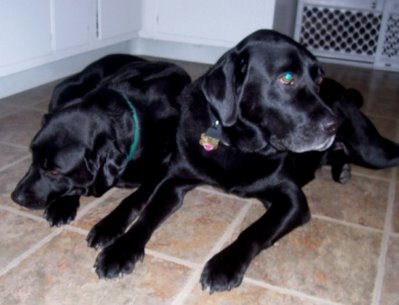
Details: Black Labs, Male, Darling Hunter and Fame are two gorgeous pure-bred labs, brothers, who find themselves needing a new home now that their owner has become too ill to care for them. They are truly wonderful dogs.

The owner's grandchildren can crawl all over them and like a typical lab; they just lay there and love it. Both are neutered, and up to date on their shots. They are housebroken and are very well behaved. They are about 4 years old. We would love to keep these two boys together if possible; they are the best of friends.

Tuesday, January 30, 2007

Radio Pieman

Flash

Zap


This just in:

The Pieman is guest hosting Jeff Berkman's radio show Wednesday (January 31st) at 9 AM on WTBQ.

So how embarrassing is this going to be?

Thursday, January 25, 2007

Spencer McLaughlin

Longtime Orange County Legislator Spencer McLaughlin loses battle with cancer
By Oliver Mackson
January 25, 2007


Goshen - Spencer McLaughlin, the eloquent, droll veteran of the Orange County Legislature who wore many hats during a lifetime of public service, died late last night at the Arden Hill campus of Orange Regional Medical Center.

He was 62.

His close friend, Legislator A. Alan Seidman, R-Salisbury Mills, said he was notified of McLaughlin’s death at about 9:30 p.m. yesterday. A few hours earlier, Seidman had visited McLaughlin at the hospital, where McLaughlin had been battling incurable pancreatic cancer.
“He was the conscience of the county,” Seidman said this morning, “always doing right for everyone – those who had a voice, and those who needed a voice.”

Seidman and McLaughlin were both elected as county lawmakers in 1989, Seidman representing the Cornwall-Salisbury Mills area, and McLaughlin, a Republican, representing the Monroe-Highland Mills region. “If memory serves, I think we were standing together at the Board of Elections the very next morning,” Seidman recalled this morning, chuckling softly.

During his career in the public sector, McLaughlin served as a deputy executive director of the New York City Commission on Human Rights. He was also the executive director of downtown business improvement districts in Peekskill and Middletown, and had a regular slot as an acerbic, savvy political commentator on the old WALL-AM radio station in Middletown, which went off the air several years ago.

And although he dropped out of law school in his 20s, he returned and graduated in 2000, and went to work for the Greenwald Law Office. He represented both the Village of New Paltz and the Village of Unionville.

He took so many quixotic stances in the Legislature that one of his colleagues dubbed him “a caucus of one.”

Tuesday, January 23, 2007

The Garden of the Little Flower

So, do we want the county to buy Camp LaGuardia?

What do you folks say?

Bear in mind that few gifts come without a price, or, as the ancient Latin American folksaying tells us: "The briefcase that Colonel North hands to you is always a little bit lighter than the one he was given in Langley."

Tuesday, January 16, 2007

Water Over The Transom

The Pieman has awoken and he sent the following:

At tonight's town board work session there was a discussion of the need to raise water rates to pay for infrastructure maintenance. The recommended increase comes to 20% above current rates. While that may sound high, we were told that it works out to an average hike of about $44 a year. This would be the first increase in six years, the second in 16 years.

Part of the discussion involved the fact that sometime soon the Village of Woodbury would be taking over responsibility for water and perhaps the increase should be left for the village board to deal with.

The problem with that is that if we went that route, I would expect some group in town to start screaming "The town kept the rates down for years, now, as soon as the village takes over, they hit us with a huge rate hike."


So, the Uncle asks, in Woodbury, is paranoia a sign of mental health?

Friday, January 05, 2007

Woodbury Town Board Doin's


Rich Cataggio was reappointed as ZBA chair and Tim Egan was appointed to the seat vacated by Ralph. In both cases the vote was 4 to 1, Big John saying no. Make of it what you will.

Also noteworthy, the fellas voted to advertise for a new Town Attorney and Gerri and Lorraine voted no.

Whys and wherefores welcomed.

Monday, January 01, 2007

Granted

Cashing in on state grant opportunities benefits KJ
By Chris McKenna

December 31, 2006Times Herald-Record

Kiryas Joel — This community's latest appeal for cash from one of its most reliable funding sources sounds perfectly reasonable at first.

What the village asked for — and got — from the Governor's Office for Small Cities was a $400,000 grant to replace 1,720 household water meters, said to be losing accuracy with age.
Its application hit all the right notes: shockingly low income levels; an explosive growth rate; a mandate from the state to conserve water. But did anyone at the state agency stop to wonder how replacing meters would help the village recover 160,000 gallons a day of "lost" water, as it was led to believe?

Every year since 2000, when New York opened the Small Cities office to ladle out community development block grants from the federal government, Kiryas Joel has sought a piece of the action, competing with hundreds of towns, villages, cities and counties around the state.
And every year, Kiryas Joel has come up a winner. All told, it has racked up nearly $3.9 million over seven years, the fifth highest total of 1,282 eligible communities.

There is no evidence that any money was outright misspent — as happened in 1989 and 1990, when Kiryas Joel diverted $100,000 in federal funds for a medical clinic to pay for a school swimming pool and a drainage pipe.
But a closer look at two of the Small Cities-funded projects — the water meters and a chicken slaughterhouse that opened in 2004 — raises questions about whether they have achieved, or could ever achieve, goals the village set in its applications.

It also provides a master class in creative grant-writing by a community famous for its success in that arena.

Leaky logic
You would expect to see geysers bursting through the sidewalks.

Over and over, the application states that Kiryas Joel loses 160,000 gallons of water a day — more than 15 percent of its daily production — and implies that the problem can be solved by replacing "antiquated and inaccurate" household water meters.

New meters, the village argued with some nimble wording, would help "identify and account for" the lost water and thereby save Kiryas Joel residents $1.6 million over 10 years.

Interspersed is the usual aria about Kiryas Joel's rapid growth and poverty rate of 63.1 percent — the highest of any municipality in the state, according to Laberge Group, the Albany consultant that wrote the application.

Springing for new meters sounds like a good solution. But not if you read the village's 1999 water conservation plan, which was attached to the grant application.

That document makes clear that most of what Kiryas Joel is referring to as "lost" water is actually water used regularly — and by necessity — to clean its filtration plant. Other so-called "losses" include water used to fight fires and flush mains.

Installing $149 meters with radio transmitters won't recover that water. At best, all it might do is help village officials identify homes with leaky faucets and running toilets.

And how much wasted water could that potentially save? The conservation plan estimated that only 0.6 percent of the village's daily water production was unaccounted for. If that rate holds, only 6,000 gallons a day of truly "lost" water exists to be found.

Asked about the misleading claims, Gedalye Szegedin, the village administrator, said they were less important than "the big picture": that the state ordered Kiryas Joel to conserve water and that replacing old meters will help it do so.

"I want to reduce my losses to the bare, bare minimum," he said.

"Move it on thru!"
One thrust in what the village has described as its campaign to boost incomes and wean residents off government aid was the construction of a chicken slaughterhouse.

Officials listed three benefits when asking Small Cities for $750,000 in 2001 to build the plant: It would expand an existing business — the Kiryas Joel Meat Market — while putting people to work and creating an abundant source of kosher meat.

"The impact this project will have on the Village is great due to its magnitude in bringing good-paying and career-based jobs to a community fighting high poverty," the application reads.
Those words were the PIN for Kiryas Joel's Albany ATM.

"Move it on thru!" an enthusiastic state official scrawled on the request.

More than five years later, the plant has undoubtedly yielded cutlets galore and reaped profits for somebody. But how many jobs did it create for Kiryas Joel residents?

The application promised to retain 15 meat market jobs and create 76 more. But it also said starting hourly wages would average $7 or $8 — hardly a "good-paying job" or a living wage for Kiryas Joel families with an average of 8.33 children, as noted elsewhere in the document.
That fact is reflected in the composition of the workforce.

When the plant opened in 2004, village officials admitted that two-thirds of the first 60 employees — those doing the bloody, undesirable work of gutting and cleaning chicken carcasses — came from outside the all-Hasidic community. They were mostly Spanish-speaking immigrants, plus a handful of residents of the Camp La Guardia homeless shelter.

Asked then about the largely imported workforce, Szegedin said the village couldn't control who sought jobs at the plant. He also predicted more Kiryas Joel residents would eventually consent to that type of labor.

Posed the same question this month, Szegedin began by saying that government programs often fail to meet their goals and must be tweaked. Then he changed course and said that many — but not most — of the employees were indeed village residents.

Follow-up papers filed with the Small Cities office and examined by the Sunday Record reported that the plant had 96 workers, 40 of them Hispanic. But it was impossible to verify the accuracy of those numbers or get a firm tally of village residents on the payroll.

Joe Picchi, a spokesman for the office, said this month that the plant has since reported 25 more employees, bringing the total workforce to 121. He didn't know how many were village residents. That was not a concern for his agency.

"The people who are hired are hired by the company, and we can't tell them who to hire," he said.

Grant blarney
All grant applications, like resumes and online dating profiles, probably contain an element of blarney. Not fraud, not outright lies — just some stretching and embellishing to look better than you deserve.

Consider two other successful Kiryas Joel pleas for Small Cities money.

In 2002, the village got $400,000 to build what officials labeled, somewhat grandly, an "emergency services command center." This formidable bunker would store the village's entire fleet of emergency vehicles — fire trucks, ambulances and constable cars — under one roof and provide a command and dispatching post.

The center has been up and running for a few years now. But it's a fire station, nothing more. The constable cars are still across town at the sewer plant and the ambulances remain in their garage on Forest Road.

Meanwhile, the second story of the building houses the village's "workforce development center," touted as another component of Kiryas Joel's war on poverty. That village built that floor with a $400,000 Small Cities grant it got in 2000.

In a cover letter to the Small Cities office promoting this job training site, Kiryas Joel Mayor Abe Wieder said that alleviating "high unemployment rates and poverty levels" was the village's "highest priority" and "of great importance."

The exaggeration here was not with the goal but the priority level. The workforce development center, funded in 2000 and completed nearly three years ago, still hasn't opened.

Kiryas Joel'sSmall Cities grants
2000: Workforce development center ($400,000)
2001: Women's services center ($750,000); poultry processing plant ($750,000)
2002: Emergency services command center ($400,000)
2003: Small business loans and senior citizen meals ($384,000)
2004: Small business loans ($400,000)
2005: Small business loans ($400,000)
2006: Water meters ($400,000)